• Creating a personalized investment plan is probably the wisest thing you can do. This tailored investment approach will help you consider your risk tolerance and financial goals. When it comes to asset allocation, you can choose asset classes that better align with your investment preferences. Instead of a generic portfolio, you can go with a tailored road map to get to your goal. 

    A personalized investment plan will also consider factors like risk and tax implications. It would be best to contact an investment management company in Dubai and let the specialists design a personalized investment plan for you! 

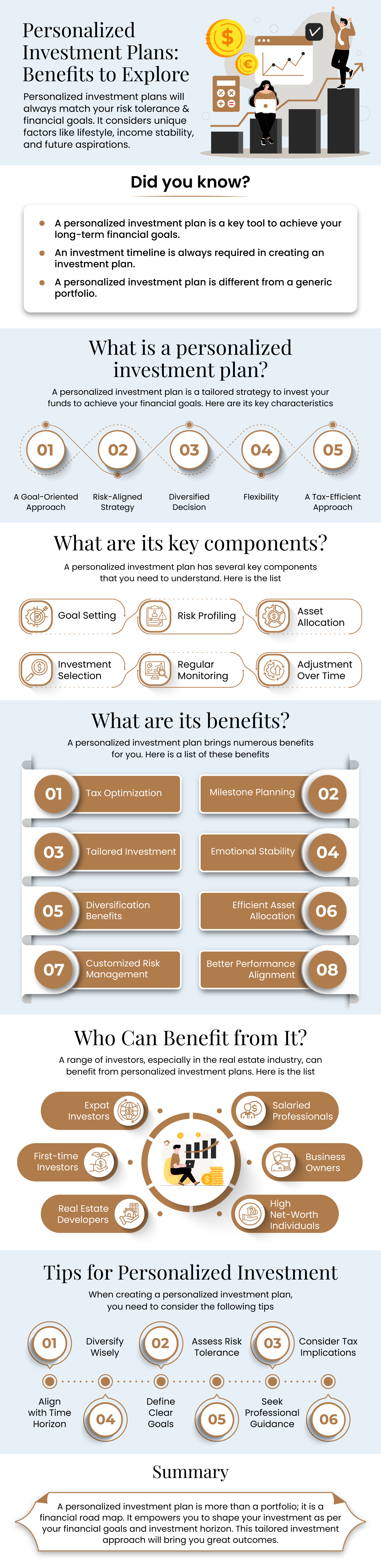
    Personalized investment plans will always match your risk tolerance and financial goals. It considers unique factors like lifestyle, income stability, and future aspirations. 

    Did You Know? 

    • A personalized investment plan is a key tool to achieve your long-term financial goals. 
    • An investment timeline is always required in creating an investment plan. 
    • A personalized investment plan is different from a generic portfolio. 

    What is a personalized investment plan? 

    A personalized investment plan is a tailored strategy to invest your funds to achieve your financial goals. Here are its key characteristics: 

    • A Goal-Oriented Approach 
    • Risk-Aligned Strategy 
    • Diversified Decision 
    • Flexibility 
    • A Tax-Efficient Approach 

    What are its key components? 

    A personalized investment plan has several key components that you need to understand. Here is the list: 

    • Goal Setting 
    • Risk Profiling 
    • Asset Allocation 
    • Investment Selection 
    • Regular Monitoring 
    • Adjustment Over Time 

    What are its benefits? 

    A personalized investment plan brings numerous benefits for you. Here is a list of these benefits: 

    •  Milestone Planning 
    • Tailored Investment 
    • Efficient Asset Allocation 
    • Customized Risk Management 
    • Better Performance Alignment 
    • Diversification Benefits 
    • Tax Optimization 
    • Emotional Stability 

    Who Can Benefit from It? 

    A range of investors, especially in the real estate industry, can benefit from personalized investment plans. Here is the list: 

    • High Net-Worth Individuals 
    • Business Owners 
    • Salaried Professionals 
    • First-time Investors 
    • Real Estate Developers 
    • Expat Investors 

    Tips for Personalized Investment: 

    When creating a personalized investment plan, you need to consider the following tips: 

    • Define Clear Goals 
    • Assess Risk Tolerance 
    • Diversify Wisely 
    • Align with Time Horizon 
    • Consider Tax Implications 
    • Seek Professional Guidance 

    Summary: 

    A personalized investment plan is more than a portfolio; it is a financial road map. It empowers you to shape your investment as per your financial goals and investment horizon. This tailored investment approach will bring you great outcomes. 

  • Investing in BTR units ensures a number of perks. Investors can benefit from resistance to recession, higher rental rates, and opportunities for portfolio diversification. It also comes with challenges like unexpected management costs, economic uncertainty, and zoning changes.

    You can avoid these issues by targeting niche demographics and monitoring policy changes. Outsourcing property management and working with a real estate expert can also help. Get in touch with reliable asset management companies in UAE now to achieve the milestone.

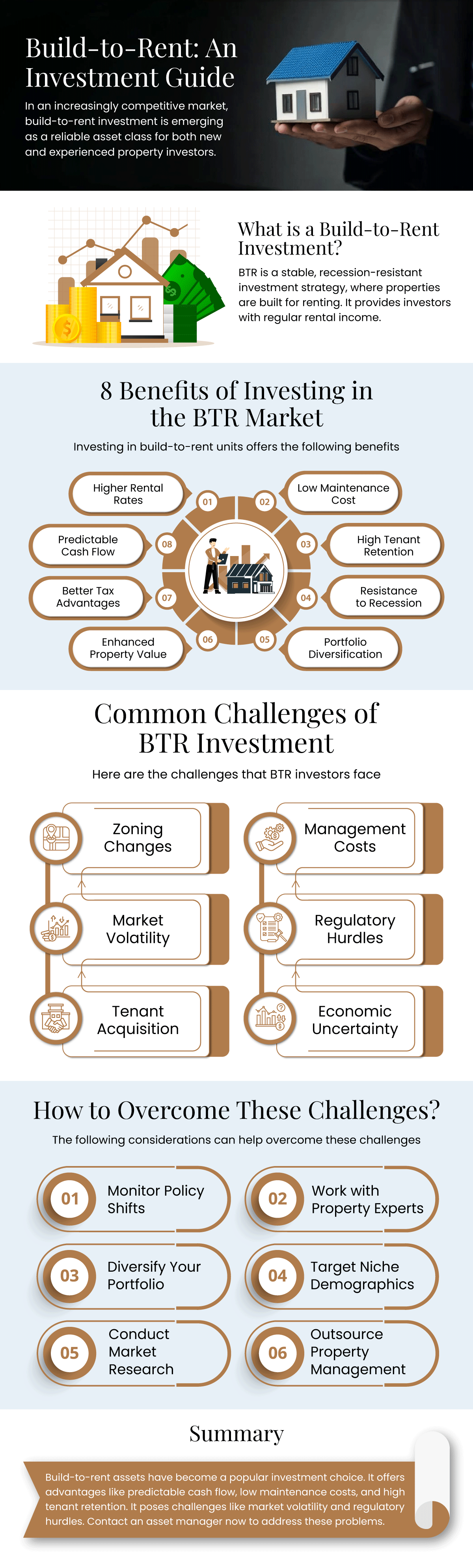
    In an increasingly competitive market, build-to-rent investment is emerging as a reliable asset class for both new and experienced property investors.

    What is a Build-to-Rent Investment?

    BTR is a stable, recession-resistant investment strategy, where properties are built for renting. It provides investors with regular rental income.

    8 Benefits of Investing in the BTR Market 

    Investing in build-to-rent units offers the following benefits:

    1. Predictable Cash Flow
    2. Low Maintenance Cost
    3. High Tenant Retention
    4. Resistance to Recession
    5. Enhanced Property Value
    6. Higher Rental Rates
    7. Better Tax Advantages
    8. Portfolio Diversification

    Common Challenges of BTR Investment

    Here are the challenges that BTR investors face:

    1. Market Volatility
    2. Regulatory Hurdles
    3. Management Costs
    4. Economic Uncertainty
    5. Zoning Changes
    6. Tenant Acquisition

    How to Overcome These Challenges?

    The following considerations can help overcome these challenges:

    1. Conduct Market Research
    2. Diversify Your Portfolio
    3. Target Niche Demographics
    4. Monitor Policy Shifts
    5. Outsource Property Management
    6. Work with Property Experts

    Summary

    Build-to-rent assets have become a popular investment choice. It offers advantages like predictable cash flow, low maintenance costs, and high tenant retention. It poses challenges like market volatility and regulatory hurdles. Contact an asset manager now to address these problems.

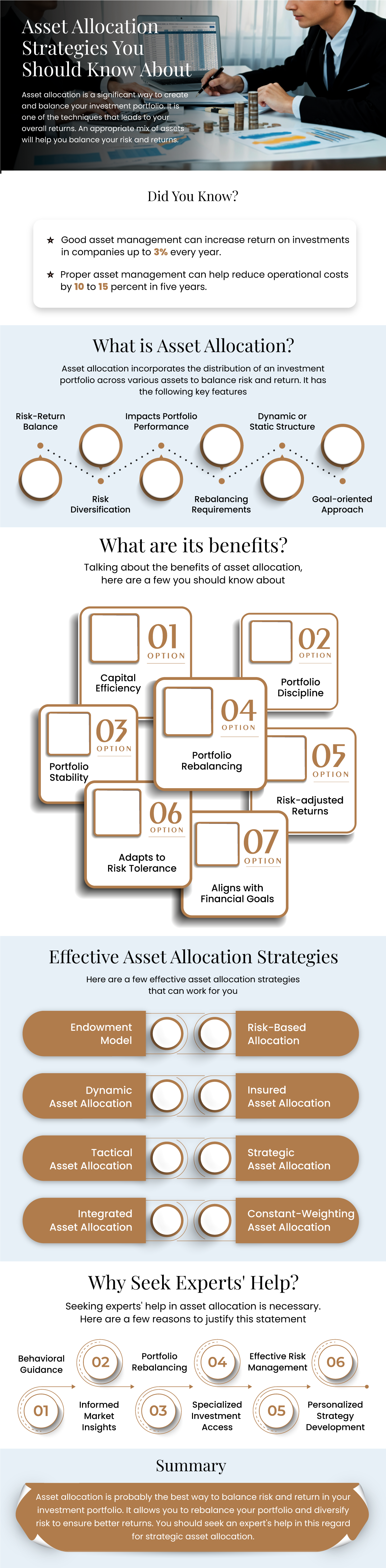
  • Picking the right mix of assets for your portfolio can be challenging. Asset allocation can confuse you at times; you should be smart enough to construct it in a way that risk and return are balanced. Asset allocation strategies can help you choose the best assets to manage risks and ensure better outcomes. It will help you build wealth and ensure financial gains in the long run. 

    Asset allocation sounds easy, but it is not. You should seek help from professional asset management companies in Dubai, as they know how to strategically allocate resources for better results. 

    Asset Allocation Strategies

    Asset allocation is a significant way to create and balance your investment portfolio. It is one of the techniques that leads to your overall returns. An appropriate mix of assets will help you balance your risk and returns. 

    Did You Know? 

    • Asset allocation is communicated as the ratio of two numbers, such as 40/60. 
    • Asset allocation can determine the overall risk and return of an investment portfolio. 
    • The impact of poor-performing assets is reduced through asset allocation. 

    Asset allocation is a foundational approach to managing risks and ensuring long-term financial gains. 

    What is Asset Allocation? 

    Asset allocation incorporates the distribution of an investment portfolio across various assets to balance risk and return. It has the following key features: 

    • Risk Diversification 
    • Risk-Return Balance 
    • Goal-oriented Approach 
    • Dynamic or Static Structure 
    • Impacts Portfolio Performance 
    • Rebalancing Requirements 

    What are its benefits? 

    Talking about the benefits of asset allocation, here are a few you should know about: 

    • Risk-adjusted Returns 
    • Portfolio Stability 
    • Aligns with Financial Goals 
    • Adapts to Risk Tolerance 
    • Portfolio Discipline 
    • Portfolio Rebalancing 
    • Capital Efficiency 

    Effective Asset Allocation Strategies: 

    Here are a few effective asset allocation strategies that can work for you: 

    • Strategic Asset Allocation 
    • Constant-Weighting Asset Allocation 
    • Tactical Asset Allocation 
    • Dynamic Asset Allocation 
    • Insured Asset Allocation 
    • Integrated Asset Allocation 
    • Risk-Based Allocation 
    • Endowment Model 

    Why Seek Experts’ Help? 

    Seeking experts’ help in asset allocation is necessary. Here are a few reasons to justify this statement: 

    • Personalized Strategy Development 
    • Informed Market Insights 
    • Portfolio Rebalancing 
    • Specialized Investment Access 
    • Behavioral Guidance 
    • Effective Risk Management 

    Summary: 

    Asset allocation is probably the best way to balance risk and return in your investment portfolio. It allows you to rebalance your portfolio and diversify risk to ensure better returns. You should seek an expert’s help in this regard for strategic asset allocation. 

  • Women must capitalize on land and buildings. It’s the best approach for them to build wealth, secure passive income, and diversify their portfolio. There are some hurdles, like tenant management, poor networking, and negotiation issues. Starting small and keeping contingency funds can address these issues. It’s also important to ask an industry expert for assistance. These individuals are well-informed and experienced. They can help you make smart investment choices. You can reach out to reputable fund managers in Dubai to navigate all the challenges and make a smart investment.

    Before investing in property, women should set clear goals, conduct thorough research, and seek help from an industry expert.

    Should Women Invest in Real Estate?

    Yes, women should invest in real estate. This is the best way to achieve financial independence, secure a steady income stream, and build wealth.

    6 Benefits of Property Investment for Women 

    Investing in land or buildings offers the following benefits for women:

    1. Financial Security
    2. Ownership Rights
    3. Rental Income
    4. Wealth Creation
    5. Portfolio Diversification
    6. Tax Advantages

    8 Challenges for Women Investors 

    Women often face the following challenges when investing in property:

    1. Gender Bias
    2. Limited Access
    3. Work-Life Balance
    4. Safety Concerns
    5. Poor Networking
    6. Tenant Management
    7. Risk Aversion
    8. Negotiation Challenges

    6 Real Estate Investment Tips for Women 

    Here are the top tips for women investors in real estate:

    1. Conduct Thorough Research
    2. Start With Small Investments
    3. Understand Property Regulations  
    4. Have a Contingency Fund
    5. Build Industry Networks
    6. Seek Help from Experts

    Conclusion

    Property investment helps women achieve financial security and ownership rights. However, they might face challenges like gender bias and limited access to resources. You can overcome these problems by staying informed and building networks. Contact a real estate expert to invest wisely.

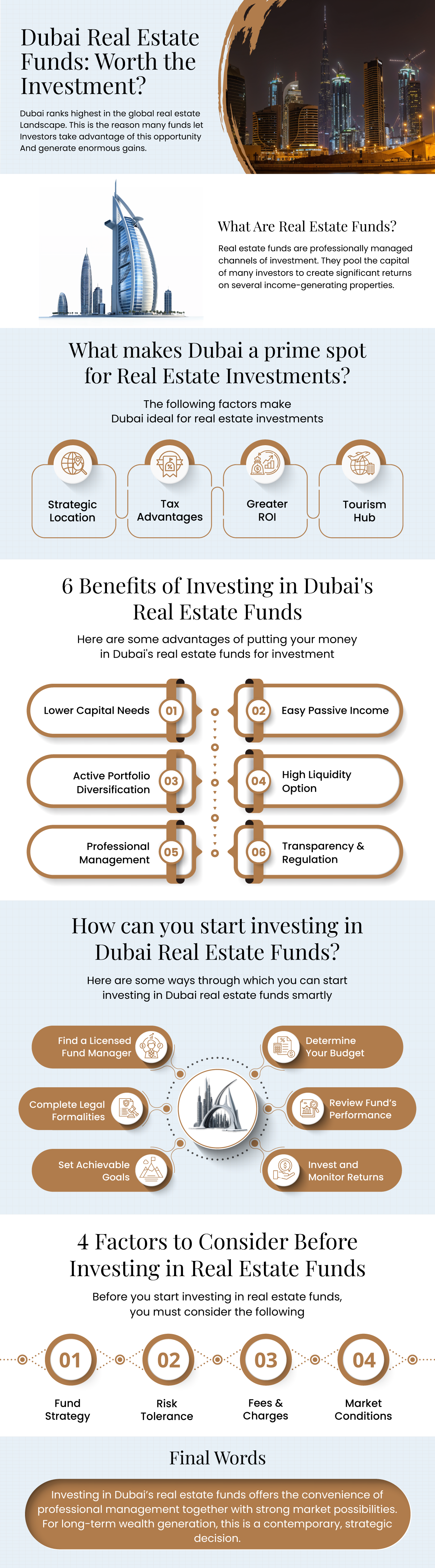
  • Real estate funds offer a smart, hands-off way to benefit from Dubai’s booming property sector. While it sounds very lucrative, the actual process of investing can be complex for some individuals. The major reason is a lack of expertise and not knowing how finances work.

    However, with professional guidance, you can expect a smooth investment journey. Whether you’re a first-time investor or a seasoned player, experts can provide exposure to a high-growth market without complexities. Get in touch with reputable Dubai Real Estate Funds today to start investing smartly with low risk and the highest ROI.

    Dubai ranks highest in the global real estate landscape. This is the reason many funds let investors take advantage of this opportunity and generate enormous gains.

    What Are Real Estate Funds?

    Real estate funds are professionally managed channels of investment. They pool the capital of many investors to create significant returns on several income-generating properties.

    What makes Dubai a prime spot for Real Estate Investments?

    The following factors make Dubai ideal for real estate investments:

    • Strategic Location
    • Tax Advantages
    • Greater ROI
    • Tourism Hub

    6 Benefits of Investing in Dubai’s Real Estate Funds

    Here are some advantages of putting your money in Dubai’s real estate funds for investment:

    • Portfolio Diversification
    • Easy Passive Income
    • Lower Capital Needs
    • High Liquidity Option
    • Professional Management
    • Transparency & Regulation

    How can you start investing in Dubai Real Estate Funds?

    Here are some ways through which you can start investing in Dubai real estate funds smartly:

    • Choose a Licensed Fund Manager
    • Determine Your Investment Budget
    • Identify and Set Achievable Goals
    • Review the Fund Performance
    • Complete Legal Formalities
    • Invest and Monitor Returns

    4 Factors to Consider Before Investing in Real Estate Funds

    Before you start investing in real estate funds, you must consider the following:

    • Fund Strategy
    • Risk Tolerance
    • Fees & Charges
    • Market Conditions

    Final Words

    Investing in Dubai’s real estate funds offers the convenience of professional management together with strong market possibilities. For long-term wealth generation, this is a contemporary, strategic decision.

  • Alternative investments have become more popular and reliable than traditional investments. People interested in long-term wealth growth specifically prefer alternative investments. Such an investment comes with its fair share of pros and cons, which might attract people and expose them to risks simultaneously.

    Investing in alternative investments requires deeper insights into the market conditions, personal goals, and limitations, as well as other aspects. If you are interested in this type of investment but lack knowledge and expertise, trusting the experts is the ideal solution. You can hire an investment management company in Dubai, share your goals with experts, and ensure smooth and professional management.

    infographic

    Alternative investments are enjoying all the hype now. Learning about them is essential to utilize them efficiently.

    What are Alternative Investments?

    Investment options outside the typical traditional categories, like bonds, stocks, or cash, are termed alternative investments. Such investments are less liquid and need significant time to sell.

    Types of Alternative Investments

    Here are some of the most common types of alternative investments you must know about:

    • Real Estate
    • Private Equity
    • Commodities
    • Hedge funds
    • Private credit
    • Structured products
    • Tangible assets
    • Collectibles
    • Farmland

    Pros of Alternative Investments

    The most notable pros of alternative investments include the following:

    • Portfolio diversification
    • Higher returns
    • Unique opportunities
    • Inflation hedge
    • Tax benefits

    Cons of Alternative Investments

    Some typical cons of alternative investments you need to watch out for are:

    • Higher risks
    • Poor transparency
    • Higher fees
    • Illiquidity
    • Regulatory risks

    Top 8 Tips to Find Alternative Investments

    Here are some effective tips you can follow to find alternative investments smoothly:

    1. Set clear investment goals
    2. Explore your investment options
    3. Check entry requirements
    4. Explore fees and risks
    5. Conduct due diligence
    6. Diversify the alternatives
    7. Explore online platforms
    8. Consult investment experts

    Take Away!

    Alternative investments are a great option for growing assets, with better diversification and higher returns. However, the need for due diligence and poor transparency requires professional expertise in managing these.

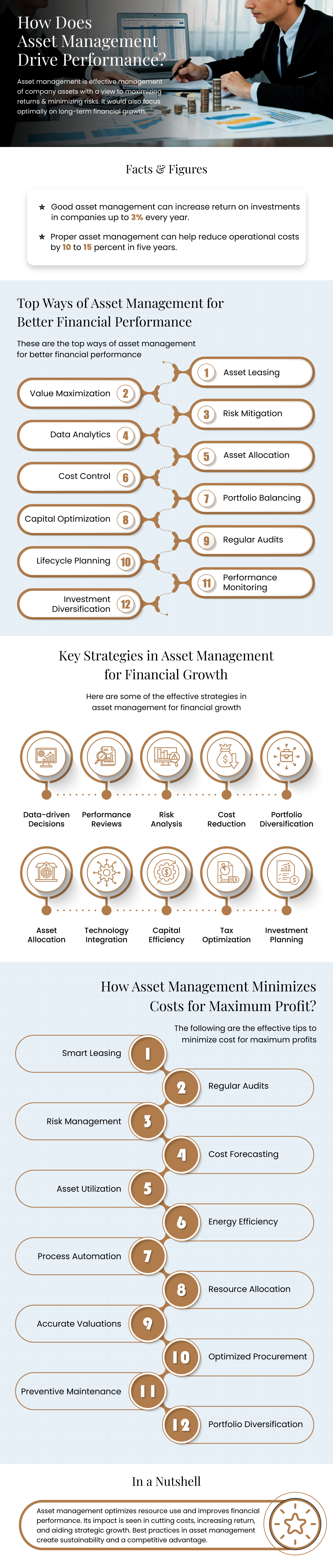
  • The role of asset management in financial performance is to optimize a company’s resources and assets. Good asset management looks at the entire process from planning to risk management and performance evaluation, returning maximum profits at minimum costs. Best practices such as diversification, evidence-based decision-making, and technology application would allow more efficient use of resources.

    In addition, auditing, lifecycle management, and cost forecasting avoid unnecessary expenditure. Thus, asset management enhances a company’s ability to make profits, emphasizes efficiency in operations, and helps in stabilizing and growing its financial future. So, you can choose asset management companies in UAE to get the professional assistance and improve overall financial performance.

    Management Enhance Financial Performance?

    Asset management is effective management of company assets with a view to maximizing returns and minimizing risks. It would also focus optimally on long-term financial growth.

    Facts & Figures

    • Good asset management can increase return on investments in companies up to 3% every year.
    • Proper asset management can help reduce operational costs by 10 to 15 percent in five years.

    Top Ways of Asset Management for Better Financial Performance

    These are the top ways of asset management for better financial performance:

    • Investment Diversification
    • Performance Monitoring
    • Risk Mitigation
    • Data Analytics
    • Asset Allocation
    • Cost Control
    • Portfolio Balancing
    • Capital Optimization
    • Regular Audits
    • Lifecycle Planning
    • Asset Leasing
    • Value Maximization

    Key Strategies in Asset Management for Financial Growth

    Here are some of the effective strategies in asset management for financial growth:

    • Data-driven Decisions
    • Performance Reviews
    • Risk Analysis
    • Cost Reduction
    • Portfolio Diversification
    • Asset Allocation
    • Technology Integration
    • Capital Efficiency
    • Tax Optimization
    • Investment Planning

    How Asset Management Minimizes Costs for Maximum Profit?

    The following are the effective tips to minimize cost for maximum profits:

    • Preventive Maintenance
    • Energy Efficiency
    • Risk Management
    • Asset Utilization
    • Regular Audits
    • Smart Leasing
    • Portfolio Diversification
    • Process Automation
    • Optimized Procurement
    • Accurate Valuations
    • Cost Forecasting
    • Resource Allocation

    In a Nutshell

    Asset management optimizes resource use and improves financial performance. Its impact is seen in cutting costs, increasing return, and aiding strategic growth. Best practices in asset management create sustainability and a competitive advantage.

  • Why should you invest funds in developer projects?

    Investing your funds in a developer project is probably the best way to grow your wealth strategically. The timing of your investment makes a meaningful difference in this domain. Investing in developer projects means investing funds in the early stage of the real estate. Buying or investing early comes with multiple advantages for investors. For instance, prices are lower, payment options are flexible, and you can expect long-term asset growth and value appreciation.

    Developer projects will earn you good money with capital appreciation and long-term growth. Investors can also gain tax benefits and incentives with this approach. In this post, we will explain why you should invest funds in developer projects. Keep walking with us to learn more!

    Reasons to invest funds in developer projects:

    Investing your funds in developer projects comes with numerous benefits. It has the potential for higher returns; investors can diversify their portfolio to reduce the overall risk and exposure. Moreover, investors investing in developer projects support economic growth in several ways. In the given list, we will uncover and explain a few compelling reasons to invest your funds in developer projects. Let us dive deep into the list!

    1. Potential for higher returns:

    Developer projects in real estate can promise substantial returns for investors. It is because of the appreciation of value in the real estate. Properties can earn you good money; it is a strategic way to double your wealth and secure higher returns with a lower degree of risk. Moreover, the success of innovative products or services developed by the project can also drive the value higher.

    Developer projects can promise higher returns and take less of your investment due to lower initial prices. You can start the investment with a comparatively lower price, and the value will go higher as the time passes.

    2. Portfolio diversification:

    Including developer projects in your portfolio of investments can diversify it. You can reduce the risk surface by distributing your funds among different projects and sectors. The strategy falls in line with the famous saying “Do not put all your eggs in one bucket.” The more diversified your portfolio is, the lower the risk. Reducing your risk means securing more chances to increase your returns in the long run.

    Developer projects operate independently of traditional financial markets. You can enjoy a hedge against market volatility and other risk factors. Do you want to invest your funds in these projects? You should contact financial managers at Global Partners and let them help you!

    3. Supporting economic growth:

    Developer projects are highly appreciated in growing economies. There is a strong reason behind it. These projects can contribute to the overall economic growth by generating job opportunities and tax revenue. Local businesses are also stimulated with these projects, which results in better economic projections. Infrastructure improvement is also facilitated with developer projects.

    When it comes to achieving broader economic objectives, developer projects can help. Economic growth is highly accelerated when there are too many developer projects running. Investors should consider these projects for economic stability and growth.

    4. Long-term asset growth:

    Developer projects in real estate can offer long-term asset growth to investors. It is more like capital appreciation. In fact, the asset growth will come in the form of capital appreciation over time. As the properties or the project matures, their values will tend to increase. With rising market prices, you can double your investment strategically with a lower degree of risk.

    Investors in developer projects can enjoy a substantial capital gain over time. They can earn more by taking less risk since the diversification factor will keep the risk degree lower.

    5. Tax benefits:

    Developer projects come with numerous benefits; one of them is tax benefits. Depending on the nature and jurisdiction of the project, there may be tax incentives and benefits available for investing in these projects. The benefits might include deductions for development costs and depreciation allowances. There might also be credits for investing in certain sectors or projects. Investors can benefit from these insights to keep the capital gain higher and pay less in tax.

    Modern-day investors are smarter than ever, and so are you. Before you invest your funds in a project, you should evaluate the tax implications and the benefits associated with it.

    Invest your funds in a developer project to gain long-term benefits!

    Investing your funds in developer projects can expose you to various benefits. For instance, you can enjoy benefits like capital appreciation, long-term asset growth, and potential for higher returns. The degree of risk is reduced in these projects due to portfolio diversification. Besides this, you can also enjoy tax benefits and incentives in certain cases. It would be best to contact professional fund managers and let them invest your funds in developer projects to gain these benefits.

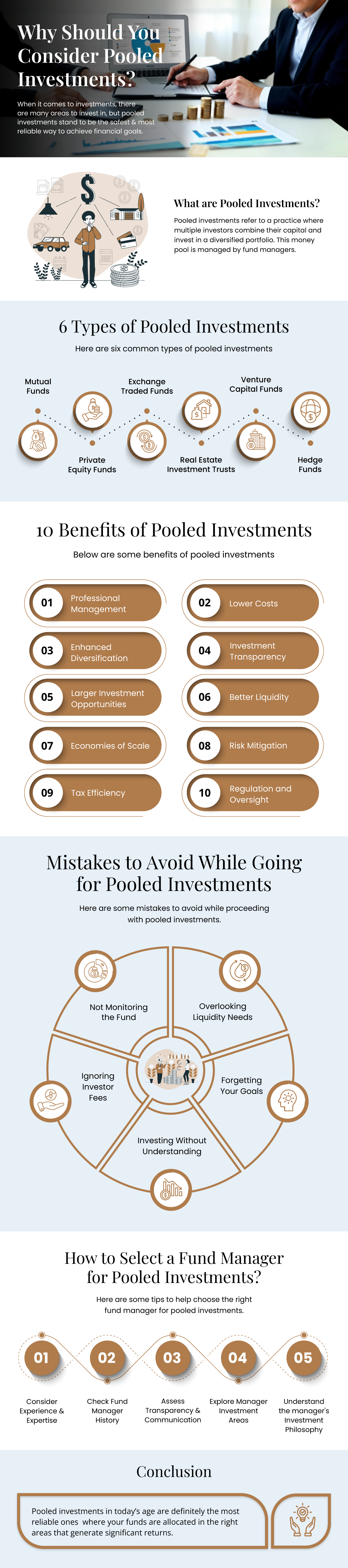
  • While investing on your own may provide you with more control over your decisions, it still involves risks. One uninformed decision can mean investing in the wrong area with higher risks and low returns. Specifically, the ones who are stepping into the investment world shouldn’t choose DIY investments.

    Pooled investments on the other hand are managed by experts. These professionals have years of experience in investing and generating high returns. They understand market conditions well and know when to make a decision. This leads to more steady income and allows investors to gain financial freedom with low risk. Considering this, you can refer fund managers in Dubai to opt for pooled investments that pave the path for your financial freedom.

    Pooled Investments infographic

    When it comes to investments, there are many areas to invest in, but pooled investments stand to be the safest and most reliable way to achieve financial goals.

    What are Pooled Investments?

    Pooled investments refer to a practice where multiple investors combine their capital and invest in a diversified portfolio. This money pool is managed by fund managers.

    6 Types of Pooled Investments

    • Mutual Funds
    • Hedge Funds
    • Exchange-Traded Funds
    • Private Equity Funds
    • Venture Capital Funds
    • Real Estate Investment Trusts

    10 Benefits of Pooled Investments

    • Professional Management
    • Lower Costs
    • Enhanced Diversification
    • Investment Transparency
    • Larger Investment Opportunities
    • Better Liquidity
    • Economies of Scale
    • Risk Mitigation
    • Tax Efficiency
    • Regulation and Oversight

    Mistakes to Avoid While Going for Pooled Investments

    Here are some mistakes to avoid while proceeding with pooled investments.

    • Ignoring Investor Fees
    • Forgetting Your Goals
    • Overlooking Liquidity Needs
    • Investing Without Understanding
    • Not Monitoring the Fund

    How to Select a Fund Manager for Pooled Investments? (Tips)

    Here are some tips to help choose the right fund manager for pooled investments.

    • Consider Experience and Expertise
    • Check Fund Manager History
    • Assess Transparency and Communication
    • Explore Manager Investment Areas
    • Understand the manager’s Investment Philosophy

    Conclusion

    Pooled investments in today’s age are definitely the most reliable ones where your funds are allocated in the right areas that generate significant returns.

  • How to Spot Red Flags in Real Estate Fund Management?

    Investing in real estate funds can offer attractive returns and portfolio diversification, but it also comes with its share of risks, especially when the fund is poorly managed. With the increasing popularity of real estate as an investment vehicle, it’s more important than ever to identify potential warning signs before committing your hard-earned money. Not all funds operate with transparency and integrity, and overlooking red flags can lead to significant financial loss.

    Whether you’re a seasoned investor or a first-timer, understanding what to look out for in fund management can help you make safer, smarter decisions. From lack of clear reporting and unrealistic promises to complex fee structures and poor communication, red flags can take many forms.

    In this blog, we’ll explore the key red flags that a real estate fund may not be operating in your best interest, and how to protect yourself. So, stay with us here to reveal the notion.

    Top 6 Tips to Spot Red Flags in Real Estate Fund Management

    Investing in real estate funds can be a smart way to diversify your portfolio and earn massive income, but not all opportunities are created equal. With growing interest in alternative investments, the real estate fund space has attracted its fair share of bad actors and poorly managed ventures. Whether you’re a seasoned investor or just exploring your options, knowing how to identify red flags in real estate fund management can protect your capital and help you make informed decisions.

    Here, in this article, we’ll highlight the top 6 tips to spot red flags in real estate fund management. So, keep an eye on this page to reveal the notion.

    Lack of Transparency in Reporting

    Transparency is a fundamental component of trust, especially when you’re entrusting your money to a fund manager. If a real estate fund fails to provide clear, timely, and comprehensive reports, it should raise an immediate concern. Investors should expect regular updates that detail fund performance, occupancy rates, project timelines, returns, and any material changes.

    Vague reporting or reluctance to share performance metrics may indicate that the fund is hiding poor results or mismanaging assets. In the age of digital tools and advanced analytics, there’s little excuse for limited transparency. A trustworthy fund manager will proactively communicate and ensure that investors are always in the loop.

    For this, you can choose Global Partner to get the assistance of professional fund managers and invest your assets in the right place.

    No Track Record or Overhyped Promises

    An investor should also beware of funds whose fund managers do not have a verifiable track record: it is very rare for someone to have risen from nothing to become a successful fund manager without a single previous assignment. When capital is handed over to an unproven manager, risk increases manifold because of the unavailability of data to prove one’s decision-making skills or the outcome of past projects.

    Risk is further compounded by some fund managers to make unusual propositions like “guaranteed double-digit returns” or “zero risk” investments. Such promises should be taken with a great deal of circumspection. Honorable managers would offer a realistic outlook, acknowledging potential risks and backing up their projections with data from past performance or market research.

    Confusing or Hidden Fee Structures

    Real estate fund fees can be complicated, but they’re not supposed to be confusing or hidden. Ambiguity regarding how managers are compensated should be a red flag of possible unethical behavior or misaligned interests. Investors should know upfront what fees they will be charged, whether acquisition fees, asset management fees, performance fees, or disposition fees, as well as when and how they will be applied.

    Hidden or excessive fees can eat away at returns and indicate a fund that’s more concerned with profiting its managers than its investors. Look for fee transparency in the fund’s offering documents and ask questions if anything seems unclear. Responsible managers will have nothing to hide in crunching numbers for you.

    High Leverage and Risky Projects

    Leverage is a very powerful tool in real estate investment. However, when it is liberally used, the cost becomes sky-high, particularly during unfortunate economic conditions. Some fund managers would generally over-leverage property with the hope that it would lead to greater returns, but would end up losing if the market value falls or projects begin to lag.

    High-risk development projects, especially those in early-marketed areas or those not proven for demand, could also signify bad news for a prudent investor. These funds seek growth and mitigation of risks, thus using credit and allocating funds to projects that are well-researched and of good viability. Before committing capital, always check the fund’s risk profile, debt ratios, and investment strategy.

    Poor Communication or Evasive Behavior

    Communication is often the critical element in the investor-manager relationship, and evasive behavior usually indicates a problem. If a manager is slow to respond, rarely offers direct answers to questions, and often gives generic, noncommittal answers, there are often deeper problems lurking in the water. Evasive behavior can denote disorganization, incompetence, or intentional efforts to conceal some major challenges.

    Investors deserve to get updates promptly, to ask questions, and to expect thoughtful answers to them. A trustworthy fund manager will communicate freely, being available through investor calls, newsletters, or one-on-one interactions. If feeling ignored or dodged, it is time to start a reassessment of the relationship.

    Overconcentration in One Market or Asset Type

    The essence of investment is diversification, and real estate is no exception to this rule. Investments emphasize one geographical region or type: office buildings in one market, only multifamily units, and those types of investments may expose the investors to significant market-specific risk. Major losses can occur due to local recession, regulatory changes, or natural disasters affecting that particular market.

    On the other hand, funds that invest across multiple geographical locations and property types will be able to weather volatile market conditions better. Request a portfolio breakdown for the funds and analyze their strategy for geographic and asset diversification. The balance of the portfolio gives an impression of a thoughtful, risk-aware management approach.

    Ready to Hire a Professional Fund Manager

    Navigating the world of real estate fund management requires due diligence, critical thinking, and a healthy dose of skepticism. While the sector offers significant potential, it’s also rife with opportunities for mismanagement and fraud. By watching out for red flags, investors can safeguard their capital and align with trustworthy, professional fund managers. Remember, a well-run real estate fund welcomes questions, values transparency, and puts investor interests at the forefront. So, don’t wait and get the assistance of a professional fund manager now.
Design a site like this with WordPress.com
Get started